What is Web Hosting? Types Explained
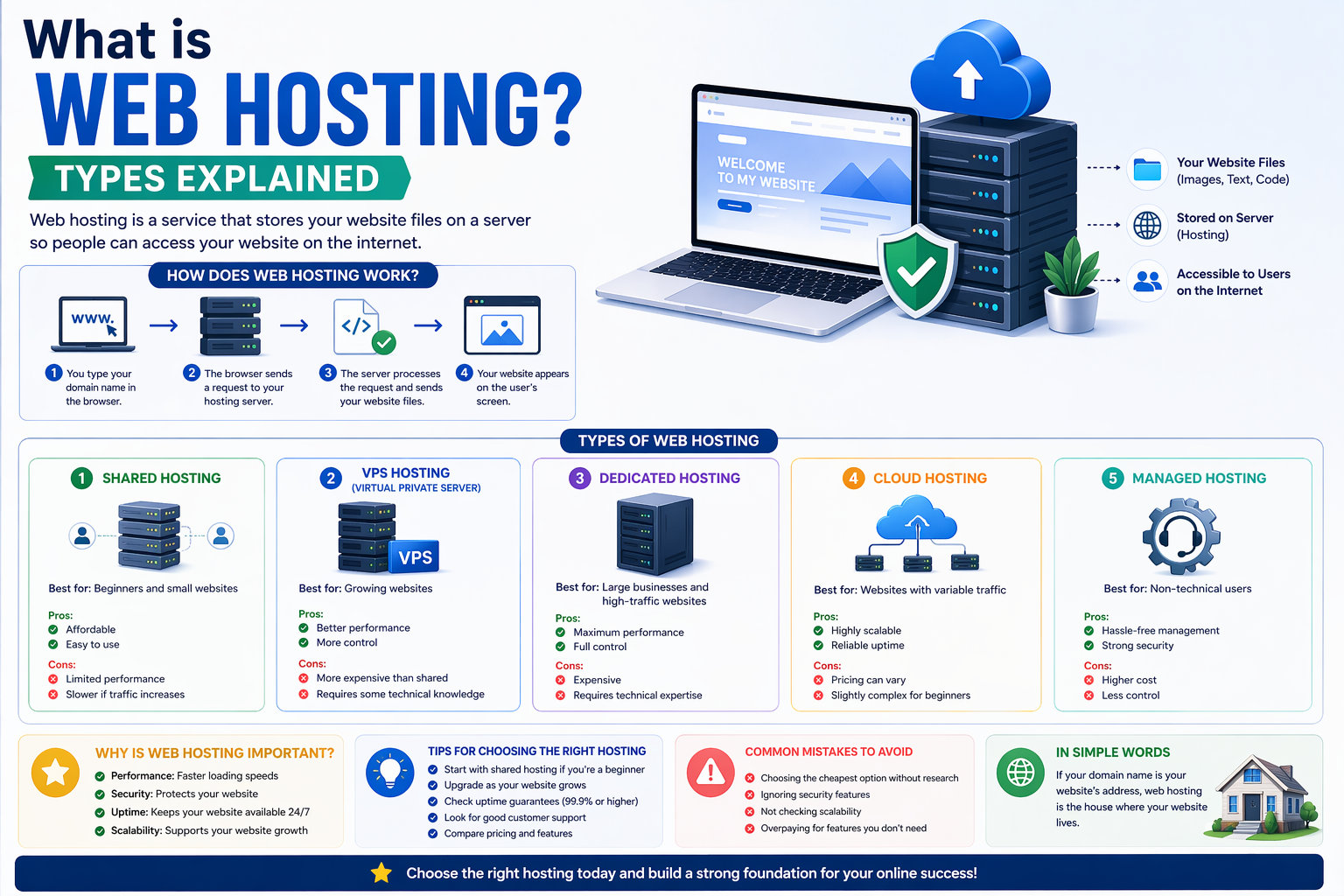
If you’re planning to create a website, you’ve probably heard the term web hosting. Along with a domain name, web hosting is one of the most important things you need to get your website online.
But what exactly is web hosting, and how does it work? Let’s break it down in a simple and beginner-friendly way.
What is Web Hosting?
Web hosting is a service that allows you to store your website’s files (like images, text, and code) on a server so that people can access your website through the internet.
In simple terms:
Web hosting is where your website “lives” online.
Without hosting, your website cannot be seen by others.
How Does Web Hosting Work?
When someone types your domain name into a browser:
- The browser sends a request to your hosting server
- The server processes the request
- It sends your website files back to the user’s browser
- The website appears on their screen
This entire process happens in seconds.
Types of Web Hosting
There are different types of web hosting, each designed for different needs and budgets.
1. Shared Hosting
In shared hosting, multiple websites share the same server and its resources.
Best for: Beginners and small websites
Pros:
- Affordable
- Easy to use
Cons:
- Limited performance
- Slower if traffic increases
2. VPS Hosting (Virtual Private Server)
VPS hosting divides a server into virtual sections, giving you more control and resources than shared hosting.
Best for: Growing websites
Pros:
- Better performance
- More control
Cons:
- More expensive than shared hosting
- Requires some technical knowledge
3. Dedicated Hosting
With dedicated hosting, you get an entire server just for your website.
Best for: Large businesses and high-traffic websites
Pros:
- Maximum performance
- Full control
Cons:
- Expensive
- Requires technical expertise
4. Cloud Hosting
Cloud hosting uses multiple servers to host your website, making it more reliable and scalable.
Best for: Websites with variable traffic
Pros:
- Highly scalable
- Reliable uptime
Cons:
- Pricing can vary
- Slightly complex for beginners
5. Managed Hosting
In managed hosting, the hosting provider takes care of technical tasks like updates, security, and backups.
Best for: Non-technical users
Pros:
- Hassle-free management
- Strong security
Cons:
- Higher cost
- Less control
Why is Web Hosting Important?
Web hosting plays a key role in your website’s success:
- Performance: Faster loading speeds improve user experience
- Security: Protects your website from threats
- Uptime: Keeps your website available 24/7
- Scalability: Supports your growth as traffic increases
Tips for Choosing the Right Hosting
- Start with shared hosting if you’re a beginner
- Upgrade as your website grows
- Check uptime guarantees (99.9% or higher)
- Look for good customer support
- Compare pricing and features
Common Mistakes to Avoid
- Choosing the cheapest option without research
- Ignoring security features
- Not checking scalability
- Overpaying for features you don’t need
Final Thoughts
Web hosting is the backbone of your website. It ensures your site is accessible, fast, and secure for visitors around the world.
Choosing the right type of hosting depends on your needs, budget, and technical skills.
In simple words:
If your domain name is your website’s address, web hosting is the house where your website lives.
Make the right choice, and you’ll set a strong foundation for your online success.






Post Comment